Preservation and Design of the Existing Heritage. Comparison and Interpretation of Some Women’s Experiences in Italy after the Second World War
DOI:
https://doi.org/10.14633/AHR206Keywords:
andscape protection, urban restoration, post-war debate, ancient/new relationship, female architectureAbstract
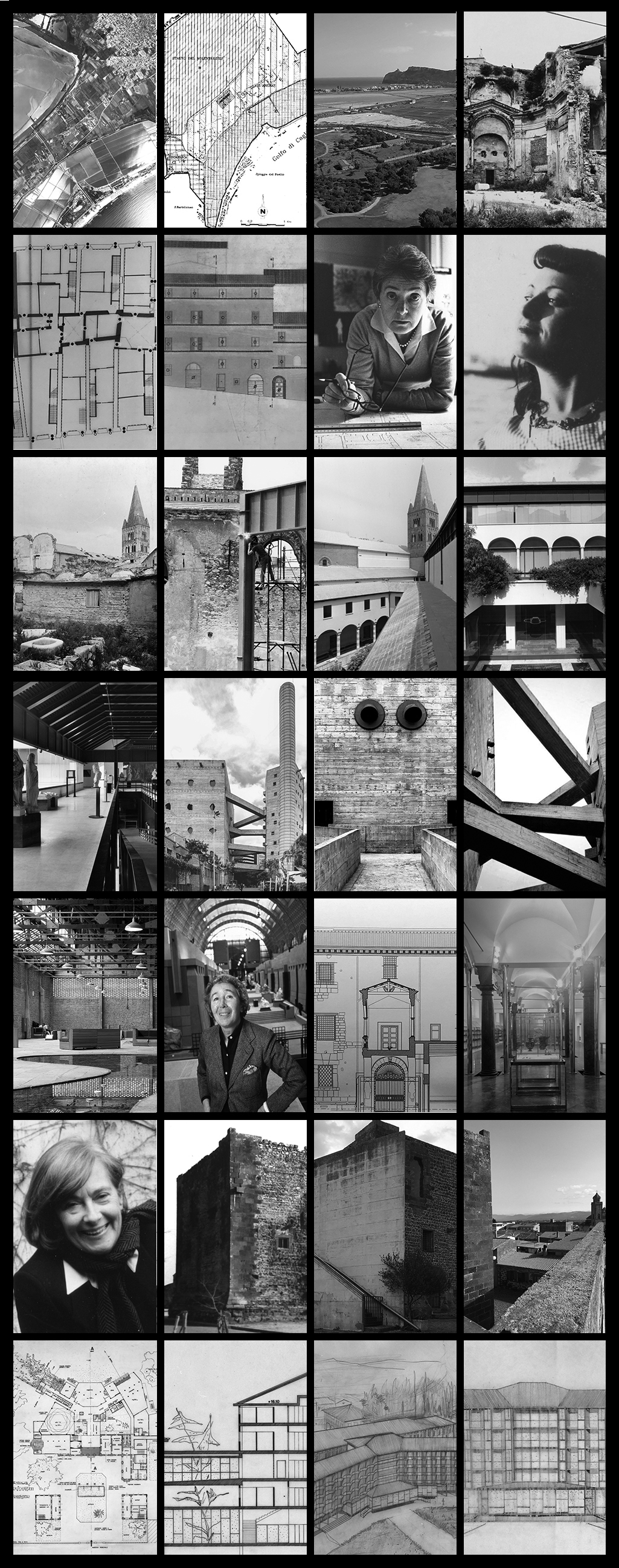
The contribute illustrates the results of a research on seven women architects, active during the second half of the twentieth century: Margherita Asso, Lina Bo Bardi, Cini Boeri, Graziana Del Guercio Barbato, Liliana Grassi, Franca Helg and Egle Renata Trincanato that, due to their deep inclination to architecture and to the protection of the existing heritage, have significantly contributed to the national and international post-war debate on restoration through their methodologies and projects. This study, supported by an extensive bibliographical investigation, is based on an accurate archival research useful to understand their position on the pre-existences: selected case studies show how the seven women operated in total coherence with the national debate, often anticipating new theoretical principles or rising new practical questions. In details, a summary of the relevant aspects shows their operative thinking allowing a critical reading through the study of some of their significant projects, validating their theoretical-conceptual principles. Therefore, the aim is to outline a more comprehensive panorama of the Theory of Restoration, focusing the attention on the influence offered by these female protagonists, on topics such as the protection of the historical landscape, the development of the urban restoration, the social dimension of the regeneration and the dialectic between old and new in the project on existing buildings.
Downloads
Additional Files
- Didascalie (Italiano)
- Figura 0 (Italiano)
- Figura 1 (Italiano)
- Figura 2 (Italiano)
- Figura 3 (Italiano)
- Figura 4 (Italiano)
- Figura 5 (Italiano)
- Figura 6 (Italiano)
- Figura 7 (Italiano)
- Figura 8 (Italiano)
- Figura 9 (Italiano)
- Figura 10 (Italiano)
- Figura 11 (Italiano)
- Figura 12 (Italiano)
- Figura 13 (Italiano)
- Figura 14 (Italiano)
- Figura 15 (Italiano)
- Figura 16 (Italiano)
- Figura 17 (Italiano)
- Figura 18 (Italiano)
- Figura 19 (Italiano)
- Figura 20 (Italiano)
- Figura 21 (Italiano)
- Figura 22 (Italiano)
- Figura 23 (Italiano)
- Figura 24 (Italiano)
- Figura 25 (Italiano)
- Figura 26 (Italiano)
- Figura 27 (Italiano)
- Figura 28 (Italiano)
- immagini e didascalie (Italiano)
Published
How to Cite
Issue
Section
License
Copyright (c) 2020 Elisa Pilia; Valentina Pintus; Maria Serena Pirisino; Martina Porcu; Monica Vargiu

This work is licensed under a Creative Commons Attribution-NonCommercial 4.0 International License.
This journal provides immediate open access to its content on the principle that making research freely available to the public supports a greater global exchange of knowledge.
ArchIstoR is published on the web in open access.
Authors who publish with this journal agree to the following terms:
- authors retain copyright and grant the journal right of first publication with the work simultaneously licensed under a Creative Commons Attribution-NonCommercial 2.0 Generic License that allows others to share the work with an acknowledgement of the work's authorship and initial publication in this journal.
- Authors are able to enter into separate, additional contractual arrangements for the non-exclusive distribution of the journal's published version of the work (e.g., post it to an institutional repository or publish it in a book), with an acknowledgement of its initial publication in this journal.
- Authors are permitted and encouraged to post their work online (e.g., in institutional repositories or on their website) prior to and during the submission process, as it can lead to productive exchanges, as well as earlier and greater citation of published work (See The Effect of Open Access).






















 Comitato scientifico internazionale
