Aloisio Novi. An architect from Intelvi Valley in Vasili III’s Russia
DOI:
https://doi.org/10.14633/AHR068Keywords:
Aloisio Novi, architettura russa, XVI secoloAbstract
The misunderstanding of names and surnames and the diversity of spelling did not help in the recognition of Aloisio Novi as a member of the second generation of Lake Artists who worked in Russia, and who were above all involved in the building of Moscow as the Grand Princes’ capital city. Aloisio Novi – who we can finally consider a member of the well-known dynasty from Intelvi Valley – arrived in Russia between the reigns of Velikij Knjaz' – Gosudar’ Ivan III (1462-1505) and his successor Vasili III (1505-1533). He was preceded by the leading figure of Pietro Antonio Solari (member of a branch of the dynasty from the Intelvi Valley), who worked together with Aristotele Fioravanti from Bononia, and by Luigi Carcano from Milan, who was active together with different masters from the Ceresio region. Before coming to Russia, Novi worked for the Crimean court of Meñli I Giray in 1504. In the same period, some of his relatives worked in the great building site of the Certosa of Pavia. He could use different architectonical languages and this capability was one of the most distinguished features of his activity in Moscow. This is particularly clear considering the projects undertaken in the Kremlin area: the cathedral of Archangel Michael, the portal of the Cathedral of the Annunciation, sections of the Palace of Facets and of the Dukal Palace. He was also involved in the building of the cathedral of the Dormition of Mary in Simonov monastery and in the cathedral dedicated to Saint Peter in the Vysoko-Petrovskij monastery. His highest achievement was his ability, typical of Lake Artists, of moulding the local Russian context with his artistic culture, meaning the Como heritage enriched with Venetian elements. It should be remembered that, in Venice, many different families from the Lombard area worked at the time, from the Lombardo del Solaro to the various dynasties from Carona. Novi introduced new architectural patterns (the Saint Peter rotunda) but was also capable of using the traditional Russian ones (the five domes, three naves and six pillars in Saint Michael). He was also able, with recognisable consistency, to lay the foundations of patterns which would influence Russian architecture at least until the beginning of the 17th century when the house of the Romanovs became the reigning dynasty (1613).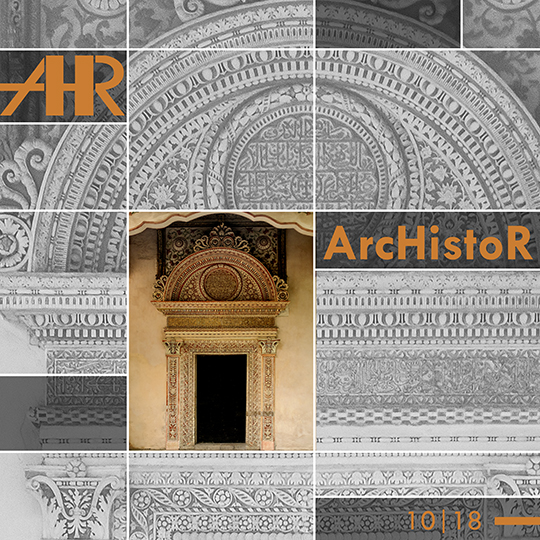
Downloads
Additional Files
Published
2019-01-13
How to Cite
Spiriti, A. (2019). Aloisio Novi. An architect from Intelvi Valley in Vasili III’s Russia. ArcHistoR Architecture History Restoration - Architettura Storia Restauro, (10), 4–25. https://doi.org/10.14633/AHR068
Issue
Section
History of Architecture
License
Copyright (c) 2019 Andrea Spiriti

This work is licensed under a Creative Commons Attribution-NonCommercial 4.0 International License.
This journal provides immediate open access to its content on the principle that making research freely available to the public supports a greater global exchange of knowledge.
ArchIstoR is published on the web in open access.
Authors who publish with this journal agree to the following terms:
- authors retain copyright and grant the journal right of first publication with the work simultaneously licensed under a Creative Commons Attribution-NonCommercial 2.0 Generic License that allows others to share the work with an acknowledgement of the work's authorship and initial publication in this journal.
- Authors are able to enter into separate, additional contractual arrangements for the non-exclusive distribution of the journal's published version of the work (e.g., post it to an institutional repository or publish it in a book), with an acknowledgement of its initial publication in this journal.
- Authors are permitted and encouraged to post their work online (e.g., in institutional repositories or on their website) prior to and during the submission process, as it can lead to productive exchanges, as well as earlier and greater citation of published work (See The Effect of Open Access).






















 Comitato scientifico internazionale
