“One Needs a Town”: from the Village of Memory to a New Community for the Future”
DOI:
https://doi.org/10.14633/AHR212Keywords:
Community, Memory, FutureAbstract
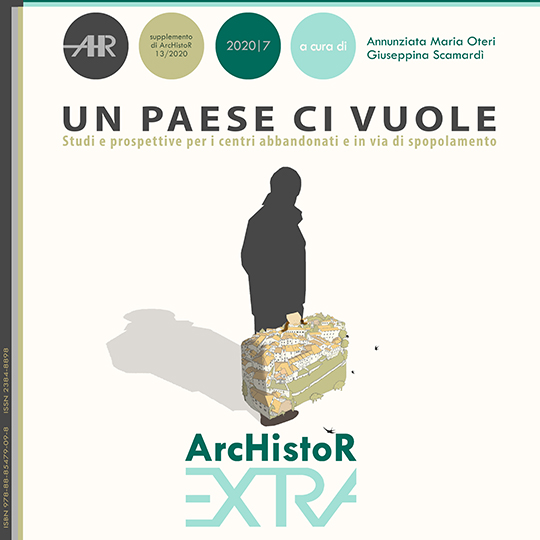
Cesare Pavese, Ernesto De Martino, Ignazio Silone, and Corrado Alvaro animate the narrative in this essay, which proposes a reflection on memory and sense of the place in the processes of abandonment. Death and re-birth both characterize the desertion of small towns in marginal areas. Initially, migration did not imply abandonment and it even seemed to have positive impacts on local economies, deep-rooted traditions, and role of inhabitants. Only in a second phase migration corresponds to depopulation and abandonment. The essay focuses on the double face of abandonment and the part of communities: Those who remain are, at the same time, the survived of the original community but also the focal point for future, possible re-population.
Un paese ci vuole: dal villaggio della memoria a una nuova comunità del futuro
Cesare Pavese, Ernesto De Martino, Ignazio Silone e Corrado Alvaro animano la narrazione in questo saggio, che propone una riflessione sulla memoria e sul senso del luogo nei processi di abbandono. Morte e rinascita caratterizzano entrambi la diserzione di piccoli centri in aree marginali. Inizialmente la migrazione non implicava l'abbandono e sembrava addirittura avere un impatto positivo sulle economie locali, sulle tradizioni radicate e sul ruolo degli abitanti. Solo in una seconda fase la migrazione corrisponde allo spopolamento e all'abbandono. Il saggio si concentra sulla doppia faccia dell'abbandono e sulla parte delle comunità: quelli che rimangono sono, allo stesso tempo, i sopravvissuti della comunità originaria ma anche il punto focale per il futuro, il possibile ripopolamento.
Downloads
Published
How to Cite
Issue
Section
License
Copyright (c) 2020 Vito Teti

This work is licensed under a Creative Commons Attribution-NonCommercial 4.0 International License.
This journal provides immediate open access to its content on the principle that making research freely available to the public supports a greater global exchange of knowledge.
ArchIstoR is published on the web in open access.
Authors who publish with this journal agree to the following terms:
- authors retain copyright and grant the journal right of first publication with the work simultaneously licensed under a Creative Commons Attribution-NonCommercial 2.0 Generic License that allows others to share the work with an acknowledgement of the work's authorship and initial publication in this journal.
- Authors are able to enter into separate, additional contractual arrangements for the non-exclusive distribution of the journal's published version of the work (e.g., post it to an institutional repository or publish it in a book), with an acknowledgement of its initial publication in this journal.
- Authors are permitted and encouraged to post their work online (e.g., in institutional repositories or on their website) prior to and during the submission process, as it can lead to productive exchanges, as well as earlier and greater citation of published work (See The Effect of Open Access).






















 Comitato scientifico internazionale
