Strategie e politiche per il rilancio dei piccoli centri nelle aree interne. Una prospettiva a misura d’uomo
DOI:
https://doi.org/10.14633/AHR210Keywords:
Spopolamento, Aree interne, Strategie, Patrimonio culturaleAbstract
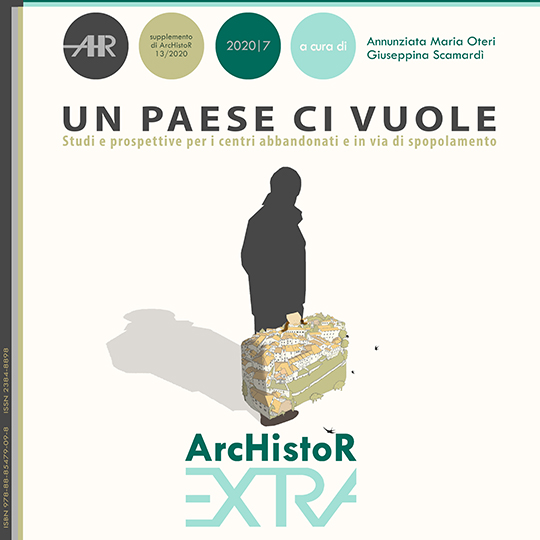
Il tema dello spopolamento delle aree interne e delle strategie per il loro rilancio è da qualche tempo tornato alla ribalta a seguito della pandemia e del conseguente periodo di quarantena che, tra le altre cose, ha messo a nudo le numerose fragilità dei grandi centri urbani. Dopo decenni di appelli inascoltati, all’improvviso sembra si sia scoperto quanto piacevole e sostenibile possa essere vivere nei piccoli centri delle aree interne e si ripropone, forse con più forza, una questione che era già al centro di alcune strategie e azioni sia a scala nazionale che europea. Ripercorrendo temi e problemi emersi nel corso del convegno internazionale “Un paese ci vuole”. Studi e prospettive per i centri abbandonati e in via di spopolamento, tenutosi a Reggio Calabria nel novembre del 2018, il saggio propone una riflessione sulle reali prospettive di ripopolamento di piccoli centri in aree marginali partendo da alcune parole chiave che dovrebbero auspicabilmente guidare i programmi di rinascita. Al centro della riflessione si pone il ruolo che il patrimonio culturale può avere in questi processi, nella prospettiva però di un significativo cambio di paradigma che inserisce la conservazione e valorizzazione di tali beni in un processo circolare che parte dal territorio (inteso come un sistema complesso dove processi storici, culturali ed economici si intrecciano con le pratiche sociali) e al territorio ritorna.
Strategies and Policies for Relaunching Depopulated Small Towns in Inner Areas. A Human Scale Perspective
The topic of abandonment has become more topical than ever in the last few months due to the Covid-19 pandemic. Since March 2020, newspapers and blogs have been dedicating at least one article or editorial per day to the incredible rediscovery of how sustainable and liveable lockdown has been in hamlets and small towns in inner areas rather than in big cities. Thus, it seems that after years of unheard appeals from small local communities at risk of disappearing, rather than being a problem, small towns are now becoming important resources.
Starting from the topics and issues proposed during the International Conference One needs a town. Studies and perspectives for abandoned or depopulated small towns, held in Reggio Calabria in 2018, the essay focuses on the concrete perspectives for the repopulation of small towns in inner areas. The perspective, which recalls the approach of the Conference, implies a more dynamic idea of repopulation, which involves the economic and social regeneration of these territories. Moreover, the purpose is also to verify if and how the enhancement of cultural heritage might play a significant role in hindering depopulation. In other words, the aim is to reflects on how culture may play a part within the broader economic and social strategies for the repopulation of marginal areas, including cultural heritage, which is the focus of the essay.
Downloads
Published
How to Cite
Issue
Section
License
Copyright (c) 2020 Annunziata Maria Oteri

This work is licensed under a Creative Commons Attribution-NonCommercial 4.0 International License.
This journal provides immediate open access to its content on the principle that making research freely available to the public supports a greater global exchange of knowledge.
ArchIstoR is published on the web in open access.
Authors who publish with this journal agree to the following terms:
- authors retain copyright and grant the journal right of first publication with the work simultaneously licensed under a Creative Commons Attribution-NonCommercial 2.0 Generic License that allows others to share the work with an acknowledgement of the work's authorship and initial publication in this journal.
- Authors are able to enter into separate, additional contractual arrangements for the non-exclusive distribution of the journal's published version of the work (e.g., post it to an institutional repository or publish it in a book), with an acknowledgement of its initial publication in this journal.
- Authors are permitted and encouraged to post their work online (e.g., in institutional repositories or on their website) prior to and during the submission process, as it can lead to productive exchanges, as well as earlier and greater citation of published work (See The Effect of Open Access).






















 Comitato scientifico internazionale
