Past and/is Future in the Implementation of the 2030 Agenda. Strategies for the Enhancement of Cultural Heritage for Fragile Territories
DOI:
https://doi.org/10.14633/AHR176Keywords:
Cultural heritage, inner areas, sustainable development strategies, resilience, urban and territorial regenerationAbstract
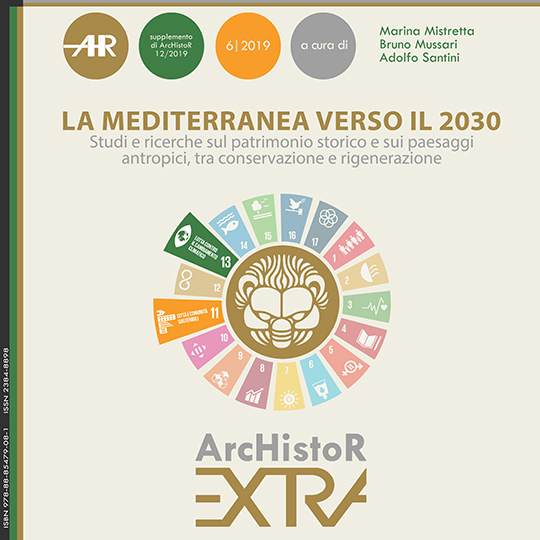
The issue of safeguarding and enhancing the cultural heritage together with its environmental and social sustainability, is increasingly present in the policies of the various institutions, at European and international level. Included in the 2030 Agenda, an innovative goal specified by Target 11.4 is included, which invites all countries to make cities and human settlements inclusive, safe, resilient and sustainable by strengthening the protection of cultural and natural heritage. Also the New Urban Agenda (2016) places Cultural Heritage as a priority component of sustainable development policies and strategies, as well as planning tools that safeguard cultural assets and landscapes in their rich and articulated diversification.
In fact, it can be fundamental for the promotion of innovative approaches and to maximize the social and economic benefits at local level, to activate processes of economic growth and social inclusion through the participation of local communities and urban regeneration actions, capable of increasing the resilience of cities and territories.
With reference to the EU, the contribution explores the potential of cultural heritage in combating depopulation dynamics and contributing to development processes in inland areas and fragile territories, with particular attention to resource management and good practices that can transform them into privileged innovation laboratories.
Passato e/è futuro nell’implementazione dell’Agenda 2030. Strategie di valorizzazione del patrimonio culturale per i territori fragili
Il tema della salvaguardia e valorizzazione del patrimonio culturale, e delle sue relazioni con la sostenibilità ambientale e sociale, è sempre più presente nelle politiche delle diverse istituzioni, a livello europeo e internazionale. Incluso nell’Agenda 2030 è un obiettivo innovativo specificato dal Target 11.4, che invita tutti i paesi a rendere le città e gli insediamenti umani inclusivi, sicuri, resilienti e sostenibili rafforzando la salvaguardia del patrimonio culturale e naturale. Ed anche la New Urban Agenda (2016) pone il patrimonio culturale come componente prioritaria delle politiche e strategie di sviluppo sostenibile, così come degli strumenti di pianificazione che salvaguardano i beni culturali e i paesaggi nella loro ricca e articolata diversificazione. Esso può rivelarsi, infatti, fondamentale per la promozione di approcci innovativi e per massimizzare i benefici sociali ed economici a livello locale, per attivare processi di crescita economica e inclusione sociale attraverso la partecipazione delle comunità locali e azioni di rigenerazione urbana, in grado di accrescere la resilienza di città e territori.
Con riferimento all’UE, il contributo esplora le potenzialità del patrimonio culturale nel contrastare le dinamiche di spopolamento e contribuire a processi di sviluppo nelle aree interne e nei territori fragili, con particolare attenzione alla gestione delle risorse e alle buone pratiche in grado di trasformarli in laboratori privilegiati di innovazione.
Downloads
Published
How to Cite
Issue
Section
License
Copyright (c) 2019 Gabriella Pultrone

This work is licensed under a Creative Commons Attribution-NonCommercial 4.0 International License.
This journal provides immediate open access to its content on the principle that making research freely available to the public supports a greater global exchange of knowledge.
ArchIstoR is published on the web in open access.
Authors who publish with this journal agree to the following terms:
- authors retain copyright and grant the journal right of first publication with the work simultaneously licensed under a Creative Commons Attribution-NonCommercial 2.0 Generic License that allows others to share the work with an acknowledgement of the work's authorship and initial publication in this journal.
- Authors are able to enter into separate, additional contractual arrangements for the non-exclusive distribution of the journal's published version of the work (e.g., post it to an institutional repository or publish it in a book), with an acknowledgement of its initial publication in this journal.
- Authors are permitted and encouraged to post their work online (e.g., in institutional repositories or on their website) prior to and during the submission process, as it can lead to productive exchanges, as well as earlier and greater citation of published work (See The Effect of Open Access).






















 Comitato scientifico internazionale
